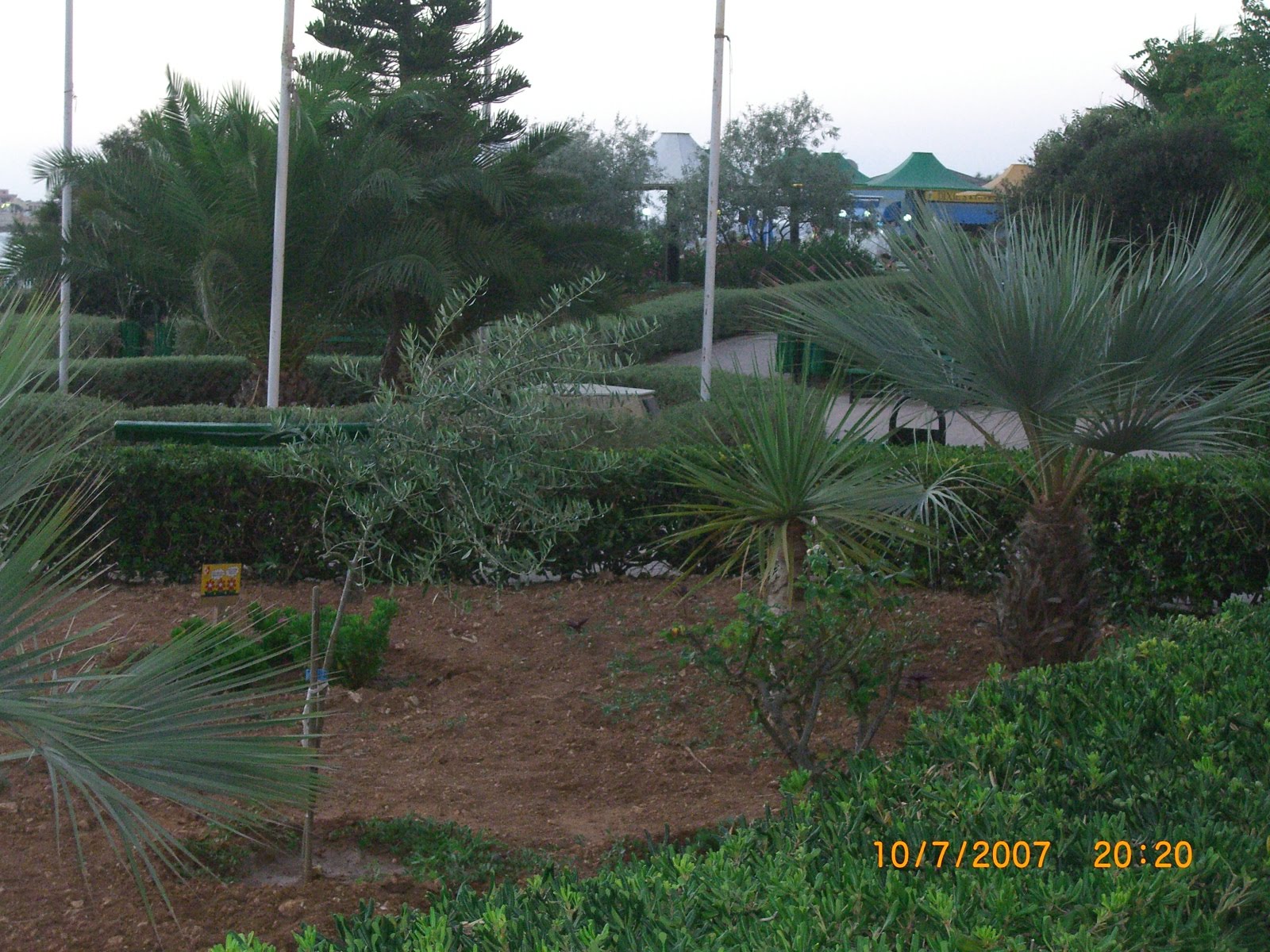
Sunday, October 10, 2010

Let us all plant a tree

Among the problems of today’s world are climate change, global warming and increasing pollution. Many conferences are being held, nationally and internationally, to discuss solutions to this environmental issue. Many solutions have been proposed. One is to plant as many trees as possible.

What is a tree? How can we benefit from it? How can it play an important role in the environment?

A tree is commonly described as a perennial woody plant. It is most often defined as a woody plant that has many secondary branches supported clear of the ground on a single main stem or trunk with clear apical dominance. …Compared with most other plants, trees are long-lived, some reaching several thousand years old and growing to up to 115 m high.

Trees are an important component of the natural landscape because of their prevention of erosion and the provision of a weather-sheltered ecosystem in and under their foliage. They also play an important role in producing oxygen and reducing carbon dioxide in the atmosphere, as well as moderating ground temperatures.

They are also elements in landscaping and agriculture, both for their aesthetic appeal and their orchard crops (such as apples). Wood from trees is a building material, as well as a primary energy source in many developing countries. Trees also play a role in many of the world’s mythologies.

Alfred Joyce Kilmer, American journalist, lecturer and poet, wrote a beautiful poem about a tree:

“I think that I shall never see

A poem lovely as a tree

A tree whose hungry mouth is prest

Against the earth’s sweet flowing breast;

A tree that looks at God all day

And lifts her leafy arms to pray;

A tree that may in summer wear

A nest of robins in her hair;

Upon whose bosom snow has lain;

Who intimately lives with rain.

Poems are made by fools like me

But only God can make a tree.”

The following is a story about how important it is to plant a tree:

Once upon a time a king was passing through fields and was surprised to see a very old man planting a tree. The king stood nearby and asked him, ‘‘Why are you planting this tree?’’

He replied: “For fruit, shade and fresh air.”

The king said, “You are very old, and maybe your health is not very good too, so before it starts giving fruit, shade and fresh air you may pass away. So why do you want to plant this tree?”

The man replied: “Your majesty, I know I am very old and I may not benefit from this tree, but I am not planting it only for myself; I want to plant it for generations to come. I want to give a long-lasting gift to the people who will come after me.

“I believe this tree will be beneficial to mankind. It will be a charity that will last for ages. And as long as people will benefit out of this tree, it will be considered a gift, a good deed and a charity from me to the people and future generations.’’

This story really has a great message – that we should pass something valuable and everlasting for generations to come. We should leave behind us something beneficial, so that when we are remembered people may speak well of us.

Now that the problems of climate change and pollution are increasing sharply, planting trees is more important than ever in human history.

On September 16, Resources Minister George Pullicino attended a tree-planting event held by the Ahmadiyya Muslim Jamaat at Salina national park whereby 30 trees were planted, including some olive trees. The olive branch is a symbol of peace and love.

A tree is a gift for life, a gift for generations, a gift liked by all, a gift which has nothing harmful. We can benefit greatly from a tree – from its leaves, fruit, shade and wood. Moreover it gives us oxygen, without which we cannot live.

During its lifetime a tree can absorb 100,000 tons of carbon dioxide. If we have enough trees, it will be a great step forward for our environment.

So, let us all plant a tree, let us take care of trees, and let us save trees, which are a source of life. Let us also serve humanity by planting trees on this beautiful planet.

The Sunday Times: Sunday, 10th October 2010

http://www.timesofmalta.com/articles/view/20101010/environment/let-us-all-plant-a-tree

Wednesday, October 6, 2010

Why more people turn to drugs?

In the contemporary world, man, as a whole, has reached a high standard of achievement in material progress. Human society, no doubt, is benefiting from the fruits of today’s scientific progress. The rays of this progress have reached far and enlightened the darkest areas of the world. Nevertheless, man is not happy and content. Moreover, the world of today is riddled with a large number of problems.

Drug misuse is a massive problem facing the world today. Children are losing their lives, dreams and future to drugs. Countless homes have been wrecked and drug-related crimes are destroying families and ruining the social fabric of communities.

A recent study in the UK shows that parents worry more about their children taking drugs than possessing knives or guns. Four in 10 parents said drug use is their biggest fear for their youngsters, 10 times as many as those who say they are concerned about their children carrying weapons (4.7 per cent).

Governments are spending big amounts of money in tackling drug misuse and fighting the war on drugs. But, they do not seem to be winning this fighting because, worryingly, the number of people turning to drugs is dramatically rising. The fact is that the demand for illicit drugs has risen and is rising sharply. More and more people than ever before are taking drugs.

The question arises: Why are people increasingly turning to drugs?

According to various drug-related studies, people normally take drugs for one of the following reasons: deprivation and unemployment, emotional and physical abuse, trauma, pain, stress, boredom, peer pressure, curiosity, wanting to experiment with something new, addiction and the easy availability and cheap price of certain drugs. And the prevailing economic depression is another contributory factor for more people to turn to drugs and gambling and, thus, lead to further crime in society.

While the above explanations may all be valid, what they illustrate is that many people use drugs because there is a void in their lives. A person encountering problems, stress, trauma or even abuse in life turns to drugs as a type of escape boat, something to remove one’s anxieties and depression.

Drugs provide a kind of temporary life raft, a relaxing and pleasurable “trip” to run away from the harsh realities of life. In times of need, a person may turn to drugs as a remedy for one’s ailments.

But, in reality, all the above reasons in favour of drugs are like a mirage in a desert, where the thirsty one thinks there is water until, when he comes to it, he finds it to be just an illusion. Drug addicts also think that drugs could quench their thirst but drugs are no more than a mirage in a desert.

If we ponder over the problem, we find that man is lacking trust and faith in God and when there is no trust in God then man tries to find relaxation through the drugs. Unfortunately, the reality is that, even in drugs, man does not find either solace or satisfaction.

What leads one to be happy and to find satisfaction and lasting peace of mind?

The Almighty God says: Aye! It is in the remembrance of Allah that hearts can find comfort. Oh, you the restless society, oh, you the restless world know for certain that true tranquillity, true peace of mind is in the remembrance of God and is in the relationship with God.

This is a great and extremely natural truth. The more the people of the world seek the paltry goods of this life, the greater becomes the hunger and the consequent burning of their hearts.

But those who seek God, the more they turn to Him, the greater is their peace of mind. This shows that the search for God is the innermost yearning of human nature and the real goal of man’s life. When that goal is attained man begins to enjoy perfect peace of mind for then he rests, as it were, in the very lap of the all knowing and all powerful God, maker and controller of the universe. If only the people of the world would realise this great secret of happiness!

Drug addiction does not only ruin someone’s life but it also ruins children, families and societies. And, moreover, it becomes a social and international crime, which disrupts all society.

Drugs cause hatred and enmity among people, leading to murder, violence, immoral behaviour etc. and, finally, pushing man away from the Creator.

Drugs cause mental and physical damage, are the cause of many crimes and lead to addiction and serious health issues.

Instead, one ought to establish a close relationship with God, ask for His mercy, seek His help to fulfil every desire and look for inspiration from Him alone. God, the Creator of the universe and everything in it, can surely remove all the depression, misery and suffering.

May God save the world from the threat of the misuse of drugs and may the world become a place of lasting peace.

http://www.timesofmalta.com/articles/view/20101006/opinion/why-more-people-turn-to-drugs

Saturday, October 2, 2010

Churches in Muslim countries

Churches, synagogues and mosques are all places of worship, wherein the name of God the Creator and Lord of the entire universe is oft-commemorated. Thus, they all are very sacred and holy and deserve to be respected and honoured fully, irrespective of the denomination to which they belong.

But, unfortunately there are some countries which do not allow the building of churches or other places of worship in their countries. Also, there are some people who are not paying full respect to the places of worship which do not belong to them or which are not the symbols of their religion. But, I believe that all places of worship, whatever the religion they belong to, whoever are the worshipers, whatever the way they worship God, they are sacred and holy and must be respected fully, in every country, in every part of the world and by all people.

I always find the news I am going to mention of great discomfort, in which I read sanctions on building places of worship or attacks on the places of worship. I read such news with great grief, sadness and sorrow whenever any place of worship is attacked, damaged, demolished and disrespected. Or any religious symbol has been dishonoured by the people of other faiths.

I have been asked many times questions, also I have read many comments and writings about these subjects, that: ‘‘Why churches are attacked in Muslim countries? Why Muslim countries do not allow the building of churches?’’ Both these are very important and valid questions, and I will try to shed some light on these issues.

1. The burning of churches in Muslim countries:

Recently I read that some churches were attacked in some Muslim countries. In September there was an attack on Christians at their congregation from HKBP church in Bekasi, Indonesia, by some hard-line Muslims. On September 12, a church in Mardan, north-western Pakistan was bombed and two Christians were injured, one of them seriously.

And on 18th September a Pentecostal church in Karachi was attacked and vandalized by unidentified Muslim men at around midnight; nine copies of the Bible, three hymn books and three wooden crosses were found burnt on the spot. Some musical instruments were also found damaged; hurting the sentiments of the local Christians.

These all are very sad and heinous attacks, they all are against the freedom of faith and against basic human rights. We condemn these attacks categorically, with the strongest terms and we appeal to the authorities to bring the culprits, who have taken the law into their own hands, in front of justice.

These attacks are completely against Islamic teachings, Islam does not provide any cover or justification to such inhuman and uncivilized attacks, but, on the contrary Islam teaches Muslims to protect and defend places of worship which belong to other religions. The Quran mentions that Muslims are to defend churches and synagogues if they are attacked, even before defending their own mosques.

‘‘Those who have been driven out from their homes unjustly, only because they said, ‘Our Lord is Allah’ - And if Allah had not repelled some people by means of others, cloisters and churches and synagogues and mosques, wherein the name of Allah is oft remembered, would surely have been destroyed. And Allah will, surely, help him who helps Him. Allah is, indeed, Powerful, Mighty.’’ (Quran: 22:41)

Such heinous attacks were not allowed even during wars and it was forbidden to attack and demolish places of worship. In the charter addressed to all Christians living as citizens in Muslim countries, the Holy Founder of Islam, states:

"None of their churches and other places of worship will be desolated or destroyed or demolished. No material of their churches will be used to build mosques or houses for the Muslims; any Muslim doing so will be regarded as recalcitrant to Allah and His Prophet.

"Every help shall be given them in the repair of their churches. They shall be absolved of wearing arms. They shall be protected by the Muslims. Let this document not be disobeyed till Judgment Day." (Quoted from Balâdhar)

2. Building churches in Muslim countries:

There are many Churches in present day Muslim countries e.g. Egypt, Syria, Turkey, Pakistan, and Indonesia. This is in line with the freedom of religion given in Islam. Islam believes in full freedom of faith and rejects any sort of force or violence in the matters of religion, the Holy Quran says:

‘‘There should be no compulsion in religion’’ [2:257]; ‘‘for you is your religion and for me is my religion’’ [109:7].

That is to say, that no one has the right to force others into complying with their demands or compelling others to follow their line of thinking. These verses have clearly showed that no one has the right to force anyone against his will to believe or to deny any faith or religion. But the choice of faith is a personal matter of someone. And everyone is allowed fully to build the place of worship according to his beliefs and he can pray freely.

However it is right to note that some Muslim countries have gone against this Islamic injunction and prohibited collective worship by non-Muslims. This is wrong and completely unacceptable. Never did the Prophet Muhammad (peace be on him) forbid the building of a church, nor did he order the demolition of a church.

Once during the time of the Prophet Muhammad, peace be on him, a Christian delegation from Najran came to Medina to have inter-faith dialogues with Muslims. The Prophet Muhammad showed them great hospitality, had discussions, with them for many days in his mosque in Medina, which is called ‘‘Mosque of the Prophet’’. At one time during the discussion the Christian delegation asked for permission to go out for some time. The Prophet Muhammad asked them, ‘‘Why do you want to go out?’’ They replied, ‘‘It is our prayer time and we would like to go out and to pray outside this mosque.’’ The Prophet said: ‘it is also a house of Allah; you may pray and worship in this mosque’. And he spared them the place in his mosque and went out with his companions so that the Christians could pray easily according to their faith and beliefs.

This incident and above mentioned teachings of Quran clearly show that not only building churches is permitted in Muslim states but also it is permitted that Christians can pray in Muslim mosques. In the light of these teachings the Ahmadiyya Muslim Jamaat has opened the doors of its mosques to all, and to the people of different faiths, and tries to tie the bonds of love, respect and brotherhood.

Nistgħu nagħmlu l-ambjent aħjar

Fid-dinja kontemporanja tal-lum, in-nies qed jibbenifikaw mill-invenzjonijiet xjentifiċi, li bidlu l-ħajja tagħna kompletament. Dawn l-invenzjonijiet xjentifiċi huma ta’ benefiċċju kbir għalina lkoll. U issa ma naħsbux li nistgħu ngħixu mingħajrhom. U minħabba dawn l-invenzjonijiet naraw bidla kbira fil-klima u t-tniġġis qed jiżdied kuljum.

Kif nafu, dawn l-invenzjonijiet għandhom effetti negattivi għal saħħitna wkoll, kif ukoll mard ta’ tip differenti qed jaffetwa n-nies. Ħafna nies qed ibatu minn allerġiji, kanċers, problemi tan-nifs, problemi ta’ ġilda, eċċ. In-numru tan-nies li jużaw inhalers qed jiżdied.

Naraw ħafa laqgħat dwar l-ambjent fil-pajjiż kif ukoll madwar id-dinja, sabiex naslu li nsalvaw il-problemi dwar l-ambjent. Ħafna diskuzzjonijiet qed jiġu organizzati biex insibu s-soluzzjonijiet ta’ kif nistgħu nagħmlu l-ambjent aħjar.

Waħda mis-soluzzjonijiet hi li nibdew inħawlu ħafna siġar kemm nistgħu f’kull pajjiż tad-dinja. Il-mistoqsija hi, għaliex is-siġra hija ta’ importanza kbira? X’inhuma l-benefiċċji tas-siġra?

Meta naqraw dwar is-siġra insibu li siġra hi vera importanti għall-ambjent kif ukoll għal saħħitna. Is-siġra tagħtina frott, kenn, injam, arja friska kif ukoll l-ossiġnu li huwa importanti ħafna għall-ħajja tagħna fuq l-art.

Hawn irrid nikteb l-istorja li qrajt ħafna snin ilu, iżda l-messaġġ tagħha huwa importanti l-istess illum kif kien qabel, anki aktar minn qatt qabel.

Qrajt li darba waħda r-re ta’ xi pajjiż kien għaddej minn qalb għelieqi u ra raġel li kien xiħ ħafna u li kien qed ħawwel siġra. Ir-re kien sorpriż u mar ħdejh u qallu: ‘‘Għalxiex inti qed tħawwel din is-siġra?’’

Ir-raġel qal: ‘‘Għall-frott, għall-kenn, għall-ossiġnu u għall-arja safja.’’

Ir-re qal: ‘‘Int taf li inti raġel xiħ ħafna u ma tafx kemm se tgħix aktar, hu possibbli li tmut qabel din is-siġra tikber, issir siġra kbira u tibda tagħti l-frott u l-kenn.’’

Ir-raġel qal: ‘‘Maestà! Din is-siġra mhux għalija. Naf li aktarx immut fil-futur qrib iżda rrid li nħalli xi ħaġa tajba lill-ġenerazzjonijiet ta’ warajja u nagħti rigal ta’ valur kbir lin-nies li ġejjin warajja.’’

U kompla jgħid li: ‘‘Din se tkun karità minni għas-snin li ġejjin, u se nirċievi l-barkiet ta’ Alla sa dak iż-żmien li din is-siġra se tibqa’ tagħti benefiċċji lin-nies.’’

Din l-istorja għandha messaġġ sabiħ ħafna; li wara l-mewt in-nies jispiċċaw imma l-affarijiet u l-għemil tajbin tagħhom jibqgħu għal dejjem. Is-siġar li jagħtu l-frott, il-kenn u l-arja safja huma wkoll wieħed mill-għemejjel tajbin li se jibqa’ għal dejjem. Għalhekk, jekk aħna rridu li n-nies jitkellmu tajjeb dwarna, wara l-mewt tagħna, allura hija importanti li aħna nħawlu ħafna siġar, kemm nistgħu.

Jekk aħna rridu li ngħixu ħajja tajba, jekk rridu li uliedna jgħixu ħajja kuntenta, jekk irridu li nħallu xi ħaġa tajba warajna għall-ġenerazzjonijiet li ġejjini, hu wisq importanti li nħawlu ħafna siġar kemm nistgħu. U nagħtu importanza kbira lil dan il-pjan.

Wasal il-ħin, li kull wieħed minna jipprova iħawwel is-siġar f’pajjiżna, li hi gżira daqstant ċkejkna iżda ħafna għażiż għalina, sabiex inħallu warajna pajjiż sabiħ, ambjent aħjar u uliedna ferħanin. Ejjew niddedikaw ruħna sabiex insalvaw l-umanità mill-problemi tal-ambjent u nagħtu dan ir-rigal prezzjuż lill-ġenerazzjonijiet li ġejjin.

B’din il-viżjoni dwar l-importanza tas-siġar, il-Komunità Aħmadija Musulmana f’Malta ħawlet siġar ‘‘fil-Park Nazzjonali tas-Salini’’, fil-preżenza tal-Ministru tar-Riżorsi u Affarijiet Rurali l-Onor. George Pullicino.

Għalhekk, din id-darba l-Ordni Aħmadija qed tikkontribwixxi fil-qasam tal-ambjent ukoll. Il-Komunità ħawlet tletin siġra fosthom ukoll siġar taż-żebbuġ. Kif nafu li l-friegħi taż-żebbuġ huma simbolu tal-paċi u l-imħabba. Għalhekk, il-Komunità Aħmadija trid tagħti l-messaġġ tal-paċi u l-imħabba lill-poplu Malti, u trid twassal il-messaġġ tal-imħabba għal kulħadd, mibegħda għal ħadd, lejn aħwa tagħna Maltin.

Hawn ukoll irrid nikteb li hemm ukoll xi nies li jivvandilizzaw is-siġar li huma ta’ ġid kbir għall-umanità. Qrajt il-poeżja ta’ Victor Fenech dwar dan il-suġġett, u jiena nixtieq li niktibha għall-qarejja tagħna. Din hi l-poeżja li jisimha ‘‘Iż-Żabra’’:

Is-siġra tal-misraħ sa lbieraħ kienet tfakkarni fir-riti antiki

tal-mara fertili qed tongħos ħedlija fuq ħaġra godlija.

Tfakkarni f’disinji ta’ dell u ta’ dija, ta’ lwien fantasija.

Tbenninni ġo nieqa ta’ friegħi u friegħ, twennisni ġo wejla

ta’ wens u mistrieħ...

Imbagħad ġewwa l-misraħ ilbieraħ, bi srieraq u slielem

armati, ġew erba’ pirati. U dritt marru ħdejha u lbiesha

ċarrtulha/qaċċtulha idejha, u xagħarha minn rasha, sa waslu

sa ngħasha. U s-siġra la tniffset, protesta la lissnet la karba

t’uġigħ.

U telqu l-pirati bis-srieraq u s-slielem. U s-siġra sserrata

ħallewha waħedha titniehed fl-ispazju ta’ misraħ li krieh.

U ġew filgħaxija l-għasafar u stagħġbu b’dil-ħerba qatigħ, u

wħud minnhom bkew. U telqu ħosbiena fuq ġwienaħ iċ-

ċomb f’kenn ieħor ifittxu dil-ħerba jinsew. U ruħi, tithenna

mdorrija b’għanjiethom mis-siġra kennija, ħassejtha

sseħibhom f’titjir(a) gunija.

U baqa’ ġo moħħi l-lejl kollu, bla friegħi bla weraq bla tjur

u bla kenn, zokk oħxon ġo misraħ iqattar id-demm.

X’nista’ ngħid aktar minn hekk!!

Local Islamic society condemns Koran burning

By Vanessa Macdonald - editorial@di-ve.com [www.di-ve.com]

The local branch of an Islamic society, Ahmadiyya Muslim Jamaat, has strongly condemned plans to burn copies of the Koran on the anniversary of September 11.

On the 9th anniversary of the attacks, the Dove World Outreach Center, a Chris¬tian church in America, is planning to hold a “Burn a Koran Day,” citing Islam as an evil religion and claiming that “Islam is of the devil.”

The centre is defending its plans with a Biblical reference from The Acts of the Apostles, the only reference in the New Testament to “book burning”.

“For verse 19:19 to be used in support of Christians gathering together to burn the scriptures of other faiths publicly is not logical and is unsupported by any other Christian teaching. The scrolls that are burnt in this verse are burnt by their owners them¬selves, the implication being that they are aware that what is contained within is not truthful and they fear being dis¬graced as those who had been using Jesus’ name to drive out demons were disgraced. They openly confess their actions and then burn the scrolls to show they are putting an end to such practices in the future.

“This is a completely different scenario from the one being presented by the Dove Center to justify burning the Qur’an,” the society said.

“In light of these clear teachings, we urge the Dove World Outreach Center to reflect upon the peaceful message of Jesus (peace be upon him) which is clearly a message of peace, not hatred,” it said.

Ahmadiyya Muslim Jamaat said the burnings would be a most provocative act which would achieve nothing but to cause distress and anger for millions of peace loving persons worldwide.

The Ahmadiyya Muslim Community said it had always expressed deep concern that some so-called Muslims tarnished Islam’s name with their cruel and hate-filled acts.

“Those who perpetrate such acts fail to realise the true teachings of Islam,” it said, stressing that Islam categorically rejects and condemns every form of terrorism.

http://www.di-ve.com/Default.aspx?ID=43&Action=1&NewsId=76284

Sunday, September 19, 2010

Ahmadiyya helps Dar tal-Providenza

18th September 2010

Laiq Ahmed Atif, president and director Ahmadiyya Muslim Jamaat Malta presented 25 food packets to Fr. Martin Micallef, the director of Dar tal-Providenza, as a donation for residents of this institution.

Laiq Ahmed Atif explained about the social, charitable and humanitarian work of the Ahmadiyya Muslim Jamaat Malta. He also presented some quotes from the writings of Hadhrat Mirza Ghulam Ahmad, the Founder of Ahmadiyya Jamaat, the Promised Messiah and Imam Mahdi of this time, whose advent was prophecised by the Holy Prophet Muhammad, peace be on him, to reform Islamic teachings.

‘‘The principle to which we adhere is that we have kindness at heart for the whole of mankind. If anyone sees the house of a Hindu neighbour on fire and does not come forward to help extinguish the fire, most truly I declare that he does not belong to me. If anyone of my followers, having seen someone attempting to murder a Christian does not endeavour to save him, I most truly declare that he does not belong to us. ……….. I love mankind with the love that a compassionate mother has for her children; even more so.”

‘‘Remember that, according to me, the circle of those to whom kindness must be shown, is vast. No people or individuals should be excluded. I do not tell you, like the ignorant people of this age, to confine your kindness to Muslims. No! I say that you must be kind to all of Allah’s Creatures, whoever or whatever it may be, be it a Hindu or a Muslim or anyone else. I never like the discourse of such people who seek to confine kindness to their own. I repeatedly admonish you that you should never ever restrict your circle of kindness.’’

Laiq Ahmed Atif also explained that the Ahmadiyya Jamaat provides its services to mankind irrespective of their colour, creed, race, nationality, politics and faith, on the basis of humanity first. It promotes its famous slogan ‘Love for all, Hatred for none.

Illum : Sunday, September 26 , 2010 ; www.illum.com.mt

Friday, September 17, 2010

Tree planting by Ahmadiyya Community Malta


Thursday 16th September 2010

The Hon George Pullicino Minister for Resources and Rural Affairs attended a tree planting event this morning by the Ahmadiyya Muslim Jamaat Community.

Mr. Laiq Ahmed Atif, President of the Ahmadiyya Muslim Jamaat Malta said; “We are always willing to contribute in every section of the society, in every social, charitable, humanitarian and welfare activity”.

“This year we are also contributing in environmental matters through planting some trees. As we know there is a big climate change, and pollution is on the increase, so there cannot be any better gift than to plant a tree for the nation and this beautiful country, Malta. And today we have planted olive trees, which are symbols of peace and love. Through planting these trees we also want to give the message of peace, love, harmony and brotherhood to all our Maltese brothers and sisters. And a message of, Love for all, hatred for none’’

Ahmadiyya donates to Hospice

Laiq Ahmed Atif, the president and director of the Ahmadiyya Muslim Jamaat Malta visited the offices of The Malta Hospice Movement to make a contribution in the noble work of the Hospice Movement.

During his visit to the Balzan offices, Mr. Laiq Ahmed Atif was briefed by Ms A. Shah, the Hospice General Manager about the services offered by the movement. Ms Shah emphasized about the importance of such donations and that thanks to similar acts of solidarity such as this, that for the past 21 years, the Movement has been able to continue with its mission of providing free-of-charge Palliative Care services to families experiencing cancer or motor neuron disease. Mr. Atif admired the work of the movement and also told about the services of Ahmadiyya Community for humanity, in Malta as well as around the world.

In the end of the visit Ms Shah, General Manager, on behalf of The Malta Hospice Movement, was presented with a donation of €500 by Mr. Laiq Ahmed Atif. The Ahmadiyya Muslim Jamaat is a universal religious organisation, with members in over 198 countries. It advocates peace, tolerance, love and understanding among followers of different faiths. It serves mankind irrespective of their faith, coulour, creed, nationality or politics, and promotes its famous slogan ‘‘Love for all, hatred for none’’.

http://www.independent.com.mt/news.asp?newsitemid=112297

http://www.timesofmalta.com/articles/view/20100926/social/ahmadiyya-donates-to-hospice

Tuesday, September 14, 2010

Let us build bridges not walls

Let us build bridges not walls

Today the world is riddled with problems; East to West, North to South, everywhere there are countless troubles and difficulties; in brief, every part of this planet is surrounded with huge discomfort. Human beings are suffering through poverty, fighting, killing, unrest, disorder, as well as with social and economical crisis. Natural disasters such as earthquakes, floods, rains, famine, lack of food, etc. are also seen in large numbers and on a huge scale.

But, unfortunately, and very amazingly, for man who is already riddled with endless problems, there are certain powers, certain organisations, and certain groups of people who are building walls of hatred. And these walls are getting higher nowadays, even more now than ever before in the history of mankind.

In recent days the plan of burning the Quran was a hot issue, and in response demonstrators were burning the flags of some countries and were raising the slogans of hatred and malice.

Aren’t the walls of hatred already too high; is there any need to make them even higher? Aren’t the bridges, which can unite us, already lacking? Isn’t the world already full of unrest, instability and uncertainty? Aren’t these walls of hatred already causing so many troubles on this planet?

In these circumstances such plans and actions, and such demonstrations and protests only help in destroying world peace. These provocative acts achieve nothing but to cause distress and anger to millions of peace-loving persons worldwide. Burning any religious scripture is a horrific act and is directly contrary to the teachings of all the world’s major religions. And such demonstrations and protests in which they burn flags, which are the symbols and honours of countries, raise slogans of hatred, use violence and damage properties are also categorically condemnable.

These actions are not a service to humanity or to any religion, but they surely destroy the peace, tranquility and serenity of the world. We have to show great respect to all the sacred books of all the religions, whatever the name is.

This plan was condemned by many political and religious leaders of the world. The Vatican condemned the plan saying it would be ‘‘an outrageous and grave gesture’’. The Vatican’s Pontifical Council for International Dialogue said in a statement that: ‘‘each religion, with its respective sacred books, places of worship and symbols, has the right to respect and protection’’.

The Holy Bible and the Holy Quran are both sacred books and were revealed by the same Almighty God for the guidance of mankind, and they both deserve to be respected and shown great honour. They are sacred to the people so we should not offend them. I think tolerance and respect for each other is very important.

I am very pleased that this plan was cancelled and did not take place; and cancellation statement was issued saying: “Not today, not ever”. I pray that we never see any such plan in future which may cause anger to the peace-loving persons and may good prevail always.

The Ahmadiyya Muslim Jamaat always condemned such acts of hatred; weather against Judaism, Christianity, and Islam or against any other religion. And always promotes tolerance, harmony, universal brotherhood and inter-faith dialogues so that the respect and love among religions can be established.

However, it is true that there are some differences in the teachings of every religion, but this is also a reality that there are hundreds commonalities among them; we have so much in common. How nice and decent it would be if believers of all the religions would focus on commonalities rather than on differences, to create the atmosphere of harmony and tolerance.

But, if someone wants to discuss and to get answers to his questions, still this is not the way to disrespect the Sacred and Holy Books and to play with the sentiments of their believers. These discussions, exchange of ideas, experiences and teachings can take place; and I think they must take place, so we come to know more about each other, but in a very decent and respectful way, with the aim of knowledge and establishing harmony among believers of different faiths.

There is nothing wrong with intellectual or theological debate but this should be conducted with the bounds of decency and tolerance. These discussions should take place in a peaceful and respectful environment.

Today the world needs peace, love and brotherhood. The world needs an end to wars. Instead of walls of hatred being erected we need peace to prevail and for this to occur people of all faiths must join together.

As the Jesus Christ said: ‘‘blessed are the peacemakers: for they shall be called the children of God. Blessed are they who are persecuted for the sake of righteousness, for theirs is the kingdom of heaven.” (Matthew 5:9-10). We all must try to be the peacemakers so we can benefit from this glad-tiding and be called the real children of God to whom He loves.

The Ahmadiyya Muslim Jamaat with great sympathy and sincerity appeals to the world that this is not a time to sow the seed of hatred, malice, disrespect and intolerance because they will ultimately destroy the peace of our societies and will create disorder on this beautiful planet. But, please, let us sow the seeds of love, harmony, tolerance and universal brotherhood, because these values will grow fruitful trees and gardens of peace, tranquility and serenity for the whole mankind.

It also appeals to different schools of thought and people of different religions and faiths to join together in building bridges which will unite us, and let us demolish all the walls of hatred and malice which separate us from each other. Let us all carry the message of peace and brotherhood to everyone, and let us spread the message of love for all and hatred for none to all corners of the world so we can all enjoy security and peace of mind, and pass something valuable to our children and generations to come, and let us save humanity.

Ahmadiyya donates at Refugee Camp


Xogħol ta’ karità fil-Kamp tar-Refuġjati

Laiq Aħmed Atif, president u direttur tal-Komunità Aħmadija Musulmana f’Malta, qassam pakketti ta’ ikel lill-familji tal-Kamp tar-Refuġjati, f’Ħal Far fl-4 ta’ Settembru 2010.

Il-Komunità Aħmadija fl-Iżlam hi organizzazzjoni reliġjuża, b’fergħat f’aktar minn 198 pajjiż, ġiet imwaqqfa minn Ħażrat Mirża Gulam Aħmad (1835-1908) fl-1889 ġewwa raħal żgħir remot jismu Kadjan fil-Punġab, l-Indja. Hu afferma li hu r-riformatur mistenni tal-aħħar żminijiet. Il-Komunità li beda hi l-inkorporazzjoni tal-messaġġ benevolenti tal-Iżlam u l-purità oriġinali tiegħu li jippromwovi l-paċi u l-fraternità universali bbażata fuq twemmin f’Alla, Ħanin u li Dejjem Jaħfer.

B’din il-konvinzjoni, fi żmien seklu, il-Komunità Aħmadija fl-Iżlam kibrat globalment u taħdem biex tippratitika t-tagħlim tal-paċi tal-Iżlam billi tiġbor mijiet ta’ eluf ta’ Ewro għall-karitajiet, bini ta’ skejjel u sptarjiet miftuħin għal kulħadd u billi tinkoraġġixxi t-tagħlim permezz ta’ djalogu fost ir-reliġjonijiet.

Il-Komunità Aħmadija taħdem biex ittejjeb il-kwalità ta’ ħajja tan-nies l-iktar foqra u l-iktar vulnerabbli tad-dinja. Hija tħaddan il-prinċipji tal-paċi, tat-tolleranza, tal-imħabba u r-rispett bejn segwaċi ta’ twemmin differenti. Hija żżomm sod u taġixxi fuq it-tagħlim Koraniku: “Mhemmx sfurzar fir-reliġjon”; u tipprattika l-motto tagħha “Imħabba għal kulħadd, mibegħda għal ħadd”.

Illum : Sunday, September 12 , 2010 ; http://www.timesofmalta.com/articles/view/20100919/social/ahmadiyya-donates

Sunday, September 5, 2010

Ejjew nirbħu l-pjaċir ta’ Alla

Ejjew nirbħu l-pjaċir ta’ Alla

Illum il-ġurnata nsibu faqar kbir imxerred ma’ kullimkien fid-dinja. Hemm ammont kbir ta’ nies li huma inqas fortunati fil-pajjiżi kollha tad-dinja – fil-pajjiżi foqra kif ukoll fil-pajjiżi sinjuri. U b’xorti ħażina dan-numru ta’ nies li huma foqra qed jiżdied kuljum. Fis-snin riċenti rajna żieda kbira minħabba kriżijiet ekonomiċi li jdawru d-dinja kollha, mil-lemin għax-xellug u minn fuq għal isfel.

Issa, il-mistoqsija hi li kif nistgħu neliminaw din il-problema tal-faqar mis-soċjetajiet tagħna kif ukoll mid-dinja kollha inġenerali?

Ħafna drabi nsibu li n-nies għandhom klejms kbar; għandhom pjanijiet ambizzjużi li, iva se nibnu l-sptar fil-parti l-fqira tad-dinja, iva se niftħu skola għan-nies li huma inqas edukattivi meta jkollna flus bil-miljuni, ukoll se nipprovdu l-ilma safi fil-pajjiżi l-foqra ta’ din il-pjaneta li aħna ngħixu fiha.

Imma huma jinsew li l-ġrien tagħhom huma bil-ġuħ; huma jinsew li l-qraba tagħhom huma f’ pożizzjoni ħażina; huma jinsew li kemm hemm nies bla djar fil-belt jew fir-raħal tagħhom stess.

Hemm ukoll nies li jgħixu fid-djar tax-xjuħ u m’hemm ħadd li jitkellem magħhom imqar ftit kliem. Xi drabi inti tmur għandhom u tgħid ftit kliem ħanin u sabiħ u tara t-tbissima u d-dawl tal-ferħ fuq wiċċhom. U għal dan m’għandniex il-bżonn tal-miljuni, imma għandna l-bżonn tal-imħabba għall-umanità.

Ir-reliġjonijiet differenti wkoll jgħallmuna dwar il-ħidma għall-umanità. Meta nistudjaw ir-reliġjonijiet il-kbar tad-dinja nsibu żewġ punti komuni ħafna fit-tagħlim tagħhom; l-imħabba u l-qima lil Alla u s-servizz għall-umanità. Dan is-servizz huwa wieħed mill-iktar kwalitajiet importanti ta’ kull reliġjon. Dik ir-reliġjon mhijiex reliġjon vera jekk m’għandhiex is-simpatija, bħalma lanqas dak ir-raġel ma jistħoqqlu jitqies bi bniedem jekk m’għandux is-simpatija u l-imħabba fih innifsu.

Hawn niftakar tradizzjoni tal-Profeta Muħammad, il-paċi miegħu. Għalkemm kien qed jitkellem ma’ sħabu xorta waħda din il-lezzjoni hija tajba ħafna u kulħadd jista’ jgawdi minnha. Hu qal li f’ Jum il-Ħaqq Alla se jikkonfrontakom u jgħidilkom li: “Kont marid u inti ma staqsejtx dwar saħħti”. Il-bniedem se jgħid: “O Alla Inti s-Sid tad-dinja kollha, u qatt ma timrad, u ma kellekx bżonn tal-għajnuna tagħna”. Alla se jgħid: “Le, wieħed mill-qaddeja Tiegħi kien marid u kellek tistaqsi dwar saħħtu u kont issibni hemm”. U wara dan se jkompli jafferma u se jgħid: “Kelli l-ġuħ u ma tajtnix ikel, kelli l-għatx u ma tajtnix ilma, ma kellix libsa u ma libbistnix”. U kuldarba l-bniedem se jgħid: “O Alla Inti s-Sid tad-dinja kollha, għandek kollox, u ma kellekx bżonn tal-għajnuna tagħna”. Alla se jgħid: “Wieħed mill-qaddeja Tiegħi kellu bżonn ta’ dak”. U kuldarba se jgħid: “Li kieku inti għamilt dan kollu, kont issibni hemm”.

Din it-tradizzjoni turi biċ-ċar, li jekk aħna rridu li nsibu l-Alla, il-Ħalieq tagħna u rridu relazzjoni personali miegħU, allura huwa importanti li aħna mmorru għand il-foqra u ngħinuhom, immorru għand xi ħadd li hu fil-bżonn u nieħdu ħsiebu, immorru għand xi ħadd li hu marid u nwennsuh. Jekk trid tiltaqa’ ma’ Alla tiegħek u wkoll trid tirbaħ l-imħabba tiegħU, mur għand in-nies li għandhom bżonnok u għinhom.

Għeżiż ħuti, jekk għandna klejms kbar u pjanijiet ambizzjużi għas-servizz tal-umanità dawn kollha huma tajbin. Imma, dan hu wkoll importanti ħafna li nħarsu madwarna u ngħinu n-nies li qed jgħixu fis-soċjetajiet tagħna. Jekk aħna ġenituri u ma niħdux ħsieb tajjeb tat-tfal tagħna, jekk aħna tfal u ma nurux rispett kbir lejn il-ġenituri tagħna, jekk ma nittrattawx lin-nisa tagħna bil-ħniena, jekk il-ġrien tagħna mhumiex fil-paċi minħabba fina, jekk għandna l-flus u ma rridux naqsmu mal-foqra u ma’ dawk li huma fil-bżonn u mal-orfnijiet u mar-romol, u jekk għandna l-ħobż u m’aħniex lesti li nagħtu nofs lill-fqir jew lil dak li hu fil-bżonn, allura, jiena nibża’ li ma nistgħux inservu ‘l-umanità kif suppost. U ma nistgħux nagħmlu l-klejms u l-pjanijiet tagħna realtà. Il-karità tibda mid-dar, kif ngħidu bl-Ingliż “Charity begins at home”. Jekk maħniex ngħinu n-nies li huma qrib tagħna, li huma jgħixu madwarna, u li huma fis-soċjetajiet tagħna kif jista’ jkun possibbli li ngħinu ‘l dawk li huma ‘l bogħod minna.

Għalhekk huwa importanti li l-ewwelnett nibdew servizz għall-umanità mis-soċjetajiet tagħna u mbgħad nespandu din il-ħidma fid-dinja kollha, f’kull naħa tad-dinja, f’kull pajjiż li hu fqir.

Il-ħidma għall-umanità hija xi ħaġa sabiħa ħafna. Meta ngħinu lil xi ħadd u naraw il-ferħ kbir fuq wiċċu, żgur inħossu sodisfazzjon liema bħalu. U meta dawk in-nies se jkunu ferħana, jiena nemmen li Alla li jista’ kollox se jkun ferħan ukoll. Jista’ jkun hemm xi ħaġa isbaħ fid-dinja mill-ferħ ta’ Alla? Le, żgur le, qatt ma jista’ jkun hemm xi ħaġa isbaħ mill-ferħ ta’ Alla.

Allura, ejjew, aħna kollha naħdmu flimkien biex inbiddlu l-ħajja tan-nies li huma inqas fortunati. Ejjew inservu ‘l-umanità kollha u biex neħilsu ‘l-umanità maħqura mill-uġigħ u l-mard tagħha. Ejjew nagħmlu s-servizz għall-umanità l-mira u l-oġġettiv mixtieq u mitlub tagħna. Ejjew niddedikaw lilna nfusna għall-ħidma u għas-servizz tal-umanità biex nirbħu l-pjaċir ta’ Alla.

Laiq Ahmed Atif

IT-TORĊA: Sunday, September 5, 2010

http://www.it-torca.com/news.asp?newsitemid=10218